
WhatsApp USA: +1 6032769350 | WhatsApp HK: +852 63697831
Global Healthcare Medical
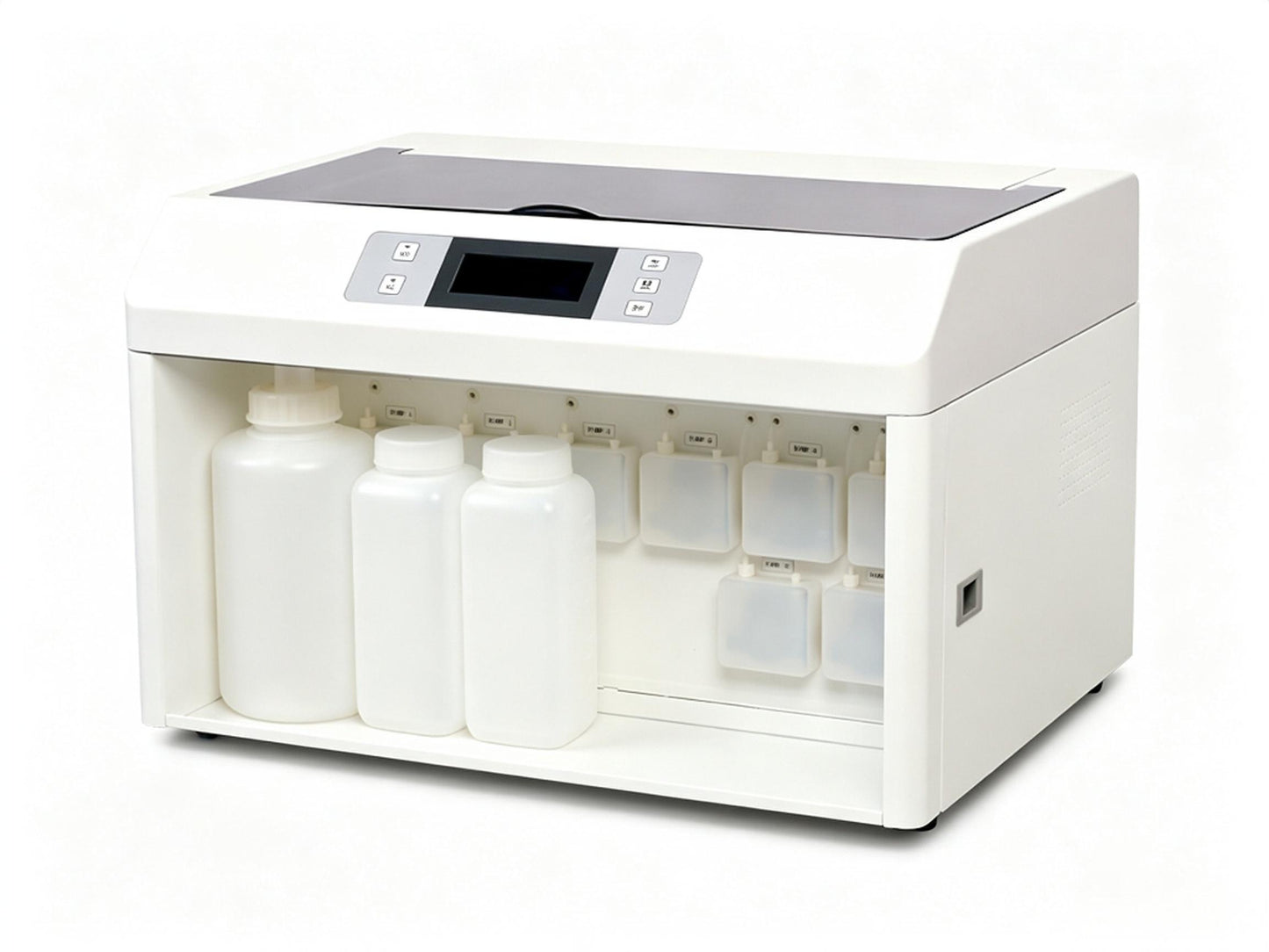
Blotray 866 Blot Processor | Automated Immunoblotting System with 40‑Strip Capacity
Blotray 866 Blot Processor | Automated Immunoblotting System with 40‑Strip Capacity
Automated blot processor for immunoblotting with 40‑strip capacity, 8 dispensing channels, incubation, and programmable protocols. Ideal for clinical immunology and allergy testing.
The Global Healthcare Medical Blotray 866 Automated Blot Processor is a versatile, fully automated immunoblotting system designed for the standardized detection of autoantibodies and allergens in clinical immunology and allergy laboratories. Built on Rayto's trusted blot processing platform, the Blotray 866 delivers high‑precision automated washing, oscillation, and incubation for immunoblot assays—all in a compact, user‑friendly benchtop system.
Capable of processing up to 40 strips per run with 6 dispensing channels (expandable to 8 channels) and adjustable dispensing volume from 0.5 to 3.0 mL in 0.1 mL increments, the Blotray 866 supports high‑throughput batch processing while maintaining exceptional precision and reproducibility. Its open reagent system accommodates a wide range of commercially available immunoblot kits, while the programmable incubation temperature (ambient to 47°C) and multi‑level oscillation frequency allow for flexible protocol optimization across diverse assays.
This device is intended for professional use in clinical laboratory settings by trained professionals. Not a substitute for professional medical diagnosis.
Key Features
🧪 High‑Capacity Strip Processing – Up to 40 Strips/Run
The Blotray 866 can process up to 40 membrane strips per run, significantly improving laboratory throughput for immunoblot assays. This high capacity supports efficient batch processing of routine and specialized immunoblot tests for autoimmune disease diagnosis and allergy testing.
💧 6‑Channel Dispensing (Expandable to 8 Channels)
Equipped with 6 dispensing channels as standard, expandable to 8 channels, the Blotray 866 delivers precise, automated reagent delivery. The dispensing volume is adjustable from 0.5 to 3.0 mL in 0.1 mL increments, accommodating a wide variety of immunoblot protocols and reagent requirements.
🌡️ Programmable Incubation Temperature & Time
The system offers programmable incubation temperature from ambient to 47°C and adjustable incubation time, allowing optimization of incubation conditions for different assay requirements. This flexibility ensures consistent, reproducible results across diverse immunoblot applications.
🔄 Multi‑Level Oscillation Frequency
The Blotray 866 provides multi‑level oscillation frequency options for the incubation槽, enabling gentle or vigorous agitation as required by specific assay protocols. This feature enhances washing efficiency and ensures thorough reagent mixing.
📋 Programmable Protocols – 15 Items, 20 Steps Each
The system supports program storage for up to 15 test items, with each item capable of holding 20 individual protocol steps. This extensive programming capability allows laboratories to store and recall optimized protocols for a wide range of immunoblot assays, reducing setup time and ensuring consistency.
🔄 Fully Automated, Walk‑Away Operation
The Blotray 866 automates the complete immunoblotting workflow—from sample loading and incubation to washing, reagent dispensing, drying, and result processing. This fully automated, walk‑away operation minimizes manual intervention and allows laboratory staff to focus on other tasks while the analyzer processes samples.
🧪 Open Reagent System
The Blotray 866 features an open reagent system that accommodates a wide range of commercially available immunoblot kits. This flexibility allows laboratories to choose from multiple reagent suppliers and customize protocols to meet specific clinical needs.
🖥️ User‑Friendly Software
The system includes intuitive software that allows users to easily define, save, and recall protocols. The software supports up to 20 saved protocols for quick access to frequently used assay settings.
✅ Automatic Liquid Volume Calibration
The Blotray 866 features software‑automated liquid volume calibration, ensuring consistent and accurate reagent dispensing across all channels and reducing the need for manual calibration.
🧩 Integrated System Components
The Blotray 866 is a complete system comprising:
| Component | Function |
|---|---|
| Control System | Centralized instrument control |
| Reagent Dispensing System | 6‑8 channel precise reagent delivery |
| Incubation & Oscillation System | Temperature‑controlled incubation with adjustable oscillation |
| Washing System | Automated membrane washing |
| Software | Protocol programming and data management |
Specifications
| Feature | Specification |
|---|---|
| Product Type | Automated Blot Processor |
| Model | Blotray 866 |
| Strip Capacity | Up to 40 strips per run |
| Dispensing Channels | 6 channels (expandable to 8 channels) |
| Dispensing Volume | 0.5 – 3.0 mL (0.1 mL adjustable) |
| Dispensing Accuracy | < ±5% |
| Incubation Temperature | Ambient – 47°C |
| Oscillation Frequency | Multi‑level adjustable |
| Protocol Storage | 15 items, 20 steps each |
| Saved Protocols | Up to 20 |
| Liquid Calibration | Software‑automated |
| Reagent System | Open |
| Operation | Fully automated, walk‑away |
| Intended Use | Immunoblotting for autoantibody and allergen detection |
| Certifications | CE, SFDA |
Applications
The Blotray 866 Automated Blot Processor is suitable for:
-
Clinical Immunology Laboratories – Autoantibody detection for autoimmune disease diagnosis
-
Allergy Clinics – Allergen‑specific IgE testing
-
Hospital Laboratories – Routine and specialized immunoblot assays
-
Reference Laboratories – High‑volume immunoblotting for autoimmune and allergy testing
-
Research Institutions – Protein immunoblotting applications
-
Western Blot Testing – Automated washing, oscillation, and incubation for Western blot assays
Why Choose the Blotray 866?
| Manual Blot Processing | Global Healthcare Medical Blotray 866 |
|---|---|
| Labor‑intensive, manual steps | Fully automated – walk‑away operation |
| Limited batch processing | 40‑strip capacity – high‑throughput batch processing |
| Manual reagent pipetting | 6‑8 dispensing channels – precise, automated reagent delivery |
| Fixed incubation conditions | Programmable temperature (ambient‑47°C) & multi‑level oscillation |
| Limited protocol storage | 15 items, 20 steps each – extensive programmability |
| Manual calibration | Software‑automated liquid volume calibration |
| Reagent‑specific systems | Open reagent system – flexible kit compatibility |
FAQ
Q: What is the Blotray 866 Automated Blot Processor?
A: The Blotray 866 is a fully automated immunoblotting system designed for the standardized detection of autoantibodies and allergens. It automates washing, oscillation, and incubation for immunoblot assays.
Q: What is the strip capacity of the Blotray 866?
A: The Blotray 866 can process up to 40 strips per run.
Q: How many dispensing channels does the Blotray 866 have?
A: The system is equipped with 6 dispensing channels as standard, expandable to 8 channels.
Q: What is the dispensing volume range?
A: The dispensing volume is adjustable from 0.5 to 3.0 mL in 0.1 mL increments.
Q: What incubation temperatures are available?
A: The system offers programmable incubation temperatures from ambient to 47°C.
Q: How many protocols can the Blotray 866 store?
A: The system supports 15 test items with 20 steps each, and can save up to 20 protocols.
Q: Does the Blotray 866 use an open reagent system?
A: Yes. The Blotray 866 features an open reagent system that accommodates a wide range of commercially available immunoblot kits.
Q: What clinical applications is the Blotray 866 suitable for?
A: The Blotray 866 is suitable for autoantibody detection (autoimmune disease diagnosis) and allergen detection (allergy testing).
Q: What certifications does the Blotray 866 have?
A: The Blotray 866 is CE certified and has a SFDA medical device registration.
Q: Is the Blotray 866 fully automated?
A: Yes. The Blotray 866 features fully automated, walk‑away operation, minimizing manual intervention and allowing laboratory staff to focus on other tasks.