
WhatsApp USA: +1 6032769350 | WhatsApp HK: +852 63697831
Global Healthcare Medical
EDAN Nano OB Assist AI Diagnostic Ultrasound System
EDAN Nano OB Assist AI Diagnostic Ultrasound System
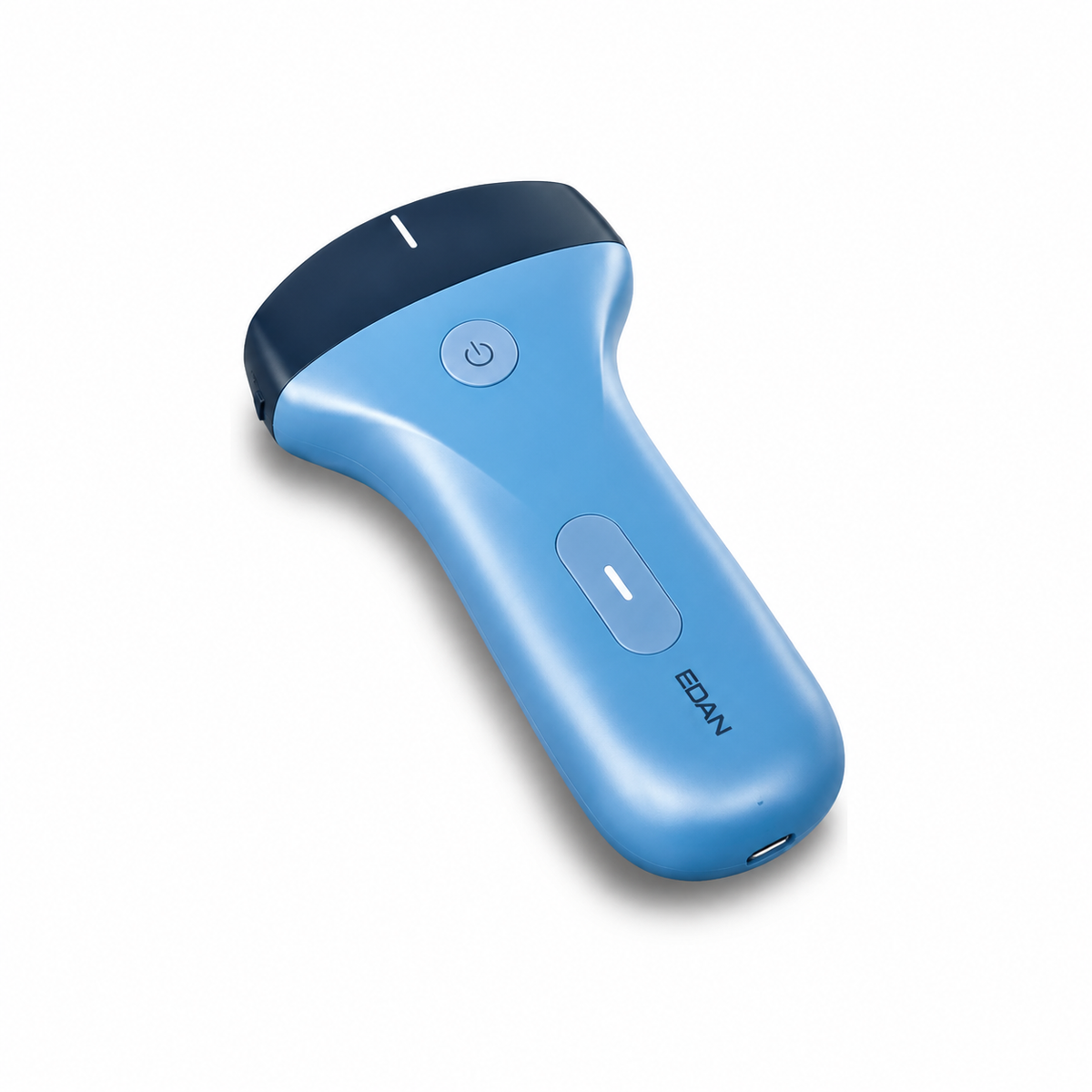
The EDAN Nano OB Assist is an AI-enabled handheld ultrasound system purpose-built for prenatal screening in primary care, community health, and low-resource settings. It pairs the EDAN Nano convex-array transducer with a dedicated AI application that guides users through a standardized six-plane “blind sweep” protocol and then automatically calculates key obstetric parameters—gestational age (GA), estimated due date (EDD), fetal presentation (FP), estimated fetal weight (EFW), and multiple gestation—without requiring manual caliper placement.
The system is CE-marked under EU MDR (CE marking received March 18, 2026), reflecting compliance with European Union safety and performance requirements for its intended use. No FDA 510(k) clearance specific to the “Nano OB Assist” product name was identified in the public FDA database during preparation of this page; the Nano C5/C5 EXP/L12/L12 EXP hardware platform is FDA-cleared under K251268, but the OB Assist AI application is not separately listed in that clearance. Availability, labeling, and cleared claims vary by market; confirm local registration and intended use before purchase.
The Nano OB Assist workflow is built around AI-assisted blind sweep technology. An on-screen schematic prompts the user through preparation, followed by a standard six-plane sweep sequence. The embedded AI then processes the acquired data offline and in real time, outputting GA, EDD, FP, EFW, and multiple gestation as structured results. This design is intended to reduce reliance on advanced sonographer training for basic prenatal measurements, supporting frontline healthcare providers in performing essential screening assessments.
Clinical scope and validation boundaries are explicitly defined: GA calculation is validated for singleton pregnancies with a gestational age between 9 weeks and 37 weeks 6 days; fetal presentation classification is validated for 28 weeks ≤ GA ≤ 37 weeks 6 days. The system is not intended for use outside these validated ranges, and the AI outputs are screening aids—they support the clinician’s assessment and do not constitute a diagnosis or replace clinical judgment.
The hardware is the EDAN Nano convex-array transducer (approximately 240 g, IP67 dust/water resistant, up to 5 hours of battery life). The system connects to an Android tablet or smartphone running the Nano OB Assist application. An optional traditional Nano APP license is available for general ultrasound imaging beyond the OB Assist workflow.
The Nano OB Assist is built for community health workers, midwives, general practitioners, and primary care clinicians who need a guided, AI-assisted prenatal screening tool that can be deployed in clinics, outreach settings, and mobile care environments—expanding access to basic obstetric ultrasound where sonographer expertise is limited.
Key Features & Benefits
AI-Guided Blind Sweep Protocol for Standardized Acquisition
The blind sweep protocol replaces freehand, expertise-dependent scanning with a structured, on-screen guided sequence. The application prompts the user through preparation and a standard six-plane sweep, supporting consistent image acquisition across users with varying ultrasound experience. The AI then processes the sweep data automatically, eliminating the need for manual caliper placement and reducing operator-dependent variability.
Automated Calculation of GA, EDD, FP, EFW, and Multiple Gestation
The embedded AI outputs five core obstetric parameters in real time and offline: gestational age, estimated due date (derived from GA), fetal presentation (cephalic or non-cephalic), estimated fetal weight, and multiple gestation. These outputs are presented as structured results for clinician review. Validation boundaries are explicit: GA is validated for singleton pregnancies at 9w–37w6d; FP classification is validated for 28w–37w6d. Results outside these ranges are not within the validated scope of the AI function.
Portable, IP67, 5-Hour Battery Hardware
The Nano convex transducer weighs approximately 240 g, carries an IP67 rating for dust and water resistance, and provides up to 5 hours of battery operation. It connects to Android tablets and smartphones via Wi-Fi or cable, and the system powers on and scans immediately, supporting point-of-care prenatal screening in clinics, outreach sites, and home visits.
Designed for Frontline and Low-Resource Settings
EDAN developed the Nano OB Assist specifically to address limited access to skilled sonographers and complex ultrasound workflows in underserved regions. The guided protocol and automated analysis are intended to support frontline healthcare providers—including those without advanced ultrasound training—in performing basic prenatal assessments and making timely referral decisions. The system was launched with a regional deployment focus in Africa, with EDAN establishing local partnerships and training support.
Offline AI Processing and Immediate On-Device Output
The AI calculations run offline on the connected Android device, with results available in real time after the sweep. This design supports use in settings with limited or no internet connectivity, and avoids dependence on cloud processing for core screening outputs.
Optional General Imaging License
An optional Traditional Nano APP license is available, enabling general ultrasound imaging beyond the OB Assist workflow. This allows the same hardware to serve abdominal, gynecological, and other general applications where the clinician requires conventional B-mode imaging.
Regulatory Status: CE-Marked; AI Application Not Separately FDA-Cleared
The Nano OB Assist is CE-marked (March 18, 2026) for its intended prenatal screening use. The Nano C5/C5 EXP/L12/L12 EXP hardware platform is FDA-cleared under K251268 (Class II, IYN/IYO/ITX), but the OB Assist AI application is not separately listed in that clearance. No independent peer-reviewed clinical validation study specific to the Nano OB Assist was identified in the public literature during preparation of this page. The product is positioned for prenatal screening support, not as a diagnostic device.
Technical Specifications
| Specification | Detail |
|---|---|
| Device Type | AI-enabled handheld ultrasound system for prenatal screening |
| Regulatory Status | CE-marked (March 18, 2026) ; Nano OB Assist AI application not separately listed in FDA K251268 (hardware platform Nano C5/C5 EXP/L12/L12 EXP is FDA-cleared); confirm local registration and intended use |
| AI Function | Blind sweep protocol; automated GA, EDD, FP, EFW, multiple gestation |
| Validated GA Range | Singleton pregnancies, 9 weeks to 37 weeks 6 days |
| Validated FP Range | 28 weeks to 37 weeks 6 days (cephalic vs. non-cephalic) |
| Transducer | Convex array; approximately 240 g |
| Ingress Protection | IP67 (dust and water resistant) |
| Battery | Up to 5 hours |
| Connectivity | Android tablet/smartphone; Wi-Fi or cable |
| AI Processing | Offline, real-time on connected Android device |
| Optional License | Traditional Nano APP (general imaging) |
| Intended Use | Prenatal screening in hospitals, clinics, or home settings by qualified healthcare professionals; AI outputs are screening aids, not diagnostic conclusions |
| Clinical Evidence | No independent peer-reviewed validation study specific to Nano OB Assist identified; validation boundaries defined by device labeling |
Why Choose the EDAN Nano OB Assist?
| Clinical or Operational Challenge | Nano OB Assist Solution |
|---|---|
| Need basic prenatal screening in settings without trained sonographers | AI-guided blind sweep protocol with on-screen prompts; automated GA, EDD, FP, EFW, and multiple gestation calculation |
| Need a portable device for outreach and low-resource environments | 240 g convex transducer; IP67; 5-hour battery; Android tablet/smartphone connectivity |
| Need standardized, operator-independent acquisition | Structured six-plane sweep sequence with AI processing; reduces reliance on freehand technique |
| Need offline operation without internet dependence | AI runs locally on the Android device; results available in real time |
| Need clear validation boundaries for clinical use | GA validated 9w–37w6d; FP validated 28w–37w6d; outside-range use is not within the AI’s validated scope |
| Need regulatory documentation for procurement | CE-marked for prenatal screening use; hardware platform FDA-cleared (K251268); confirm local market access |