
WhatsApp USA: +1 6032769350 | WhatsApp HK: +852 63697831
Global Healthcare Medical
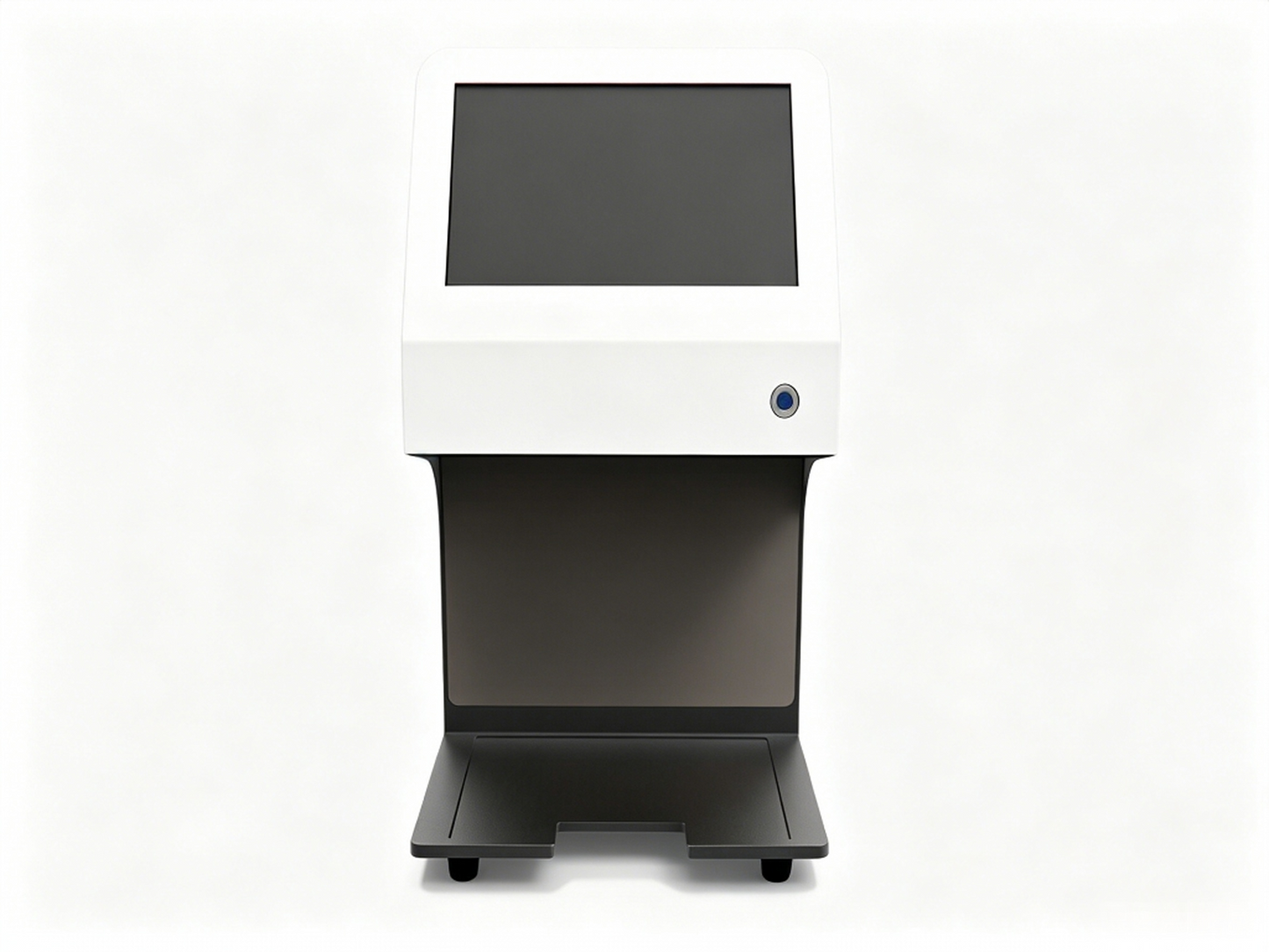
GHM ARS-300 Slide Batch Reader
GHM ARS-300 Slide Batch Reader
⚡ Blazing Fast — 20 Slides in 1.5 Seconds
Speed matters when every second counts. The ARS-300 identifies up to 20 slides in just 1.5 seconds — that's less than 0.1 seconds per slide. Load your slide tray, press start, and walk away. Batch reading has never been faster.
Why it matters: Eliminate manual barcode scanning bottlenecks at accessioning stations. Process hundreds of slides per hour without breaking stride.
✅ ≥99.99% Read Success Rate — Absolute Reliability
With a ≥99.99% read success rate, the ARS-300 delivers near-perfect accuracy on every batch. Advanced decoding algorithms handle worn labels, poor print quality, and challenging lighting conditions.
Why it matters: No manual error correction. No re-scans. No workflow interruptions. Trust that every slide is identified correctly the first time.
🔍 Barcode Verification & Exact Position Locating
The ARS-300 doesn't just read barcodes — it verifies them. The system detects abnormal or unreadable codes and pinpoints their exact position in the tray (eg, "Slot 7, Row 2"). No more searching through 20 slides to find the problem.
Why it matters: Instantly identify which slide failed. Remove and re-label just that slide, then re-scan the batch. Your workflow keeps moving.
📖 Reads Everything — Barcodes, QR Codes & OCR
The ARS-300 supports 1D barcodes, 2D QR codes, and OCR recognition — all in a single pass. Mixed label types in the same tray? The system automatically detects and decodes each identifier without manual configuration.
Why it matters: One reader handles all your existing slide labels. No need to standardize labeling or re-label legacy slides.
💻 Software-Independent — Direct LIS Integration
The ARS-300 runs on a standalone embedded system with no external PC required. Connect directly to your Laboratory Information System (LIS) via USB 3.0 Hi-Speed (supports USB-CDC and USB-HID protocols).
Why it matters: No software licenses. No driver headaches. No PC maintenance. Plug and play with your existing LIS workflow.
🧩 Compact Design — Open Frame for Easy Integration
Dimensions: 383mm × 326mm × 619mm (W×D×H). Weight: 21kg. The ARS-300 features a compact footprint with an open-frame design that fits seamlessly into slide processing lines and automation workflows.
Why it matters: Perfect for crowded accessioning areas, grossing stations, and automated slide processing systems. Integrates easily with conveyor belts and robotic handlers.
📐 210mm × 190mm Recognition Field of View
The ARS-300's 210mm × 190mm field of view captures an entire 20-slide tray in a single pass. Just load your tray — the system does the rest automatically.
Why it matters: No repositioning, no multiple scans, no manual alignment. True batch processing with zero operator intervention.
🖥️ Built-In 14-Inch Screen — No PC Required
Unlike competitive products that require an external computer, the ARS-300 features a built-in 14-inch screen. The embedded system runs independently — power on, read slides, view results instantly.
Why it matters: Save bench space, reduce IT complexity, and eliminate dedicated PC costs. The ARS-300 works right out of the box.
🌍 Built for Any Lab Environment
Operating temperature range: 0°C to +50°C. Humidity tolerance: ≤90%. The ARS-300 is engineered to perform reliably in real-world lab conditions — whether it's a freezing grossing room or a warm, humid storage area.
Why it matters: Consistent performance regardless of environmental fluctuations. No warm-up delays, no sensitivity to lab conditions.
🔌 Global Power Compatibility
Runs on 100–240V, 50/60Hz — compatible with any electrical system worldwide. No transformer needed, no voltage converters.
Why it matters: Deploy globally with zero power compatibility issues. The same unit works in North America, Europe, Asia, and beyond.
📦 Compare: ARS-300 vs. ARC-300
| Feature | ARS‑300 (Slide Batch Reader) | ARC‑300 (Cassette Batch Reader) |
|---|---|---|
| Application | Slides | Cassettes |
| One-time identification | 20 slides | 200 cassettes |
| Recognition time | ≤1.5 seconds | ≤5 seconds |
| Dimensions (W×D×H) | 383×326×619 mm | 383×341×639 mm |
| Field of view | 210×190 mm | 210×190 mm |
| Screen size | 14 inches | 14 inches |
| Best for | Slide batch reading at accessioning | Cassette batch reading in histology |
Which one is right for you?
-
Choose ARS-300 if you need fast, reliable batch reading of slides at accessioning stations or before scanning
-
Choose ARC-300 if you need high-volume batch reading of tissue cassettes in histology labs or biobanks
💡 Perfect For
✅ Histology labs — Batch slide identification before digitization
✅ Accessioning stations — Rapid slide intake and tracking
✅ Reference laboratories — High-volume slide processing workflows
✅ Digital pathology labs — Pre-scan slide verification and sorting
✅ Research institutions — Sample management and cataloging
🔧 What's Included
-
ARS-300 Slide Batch Reader with built-in 14" screen
-
Slide tray (holds up to 20 slides)
-
USB 3.0 cable for LIS connectivity
-
Power cord (regional type supplied)
-
Quick start guide
-
1-year warranty with technical support
📋 Quick Specs
| Feature | Specification |
|---|---|
| Application | Slides |
| Batch capacity | 20 slides |
| Recognition time | ≤1.5 seconds per batch |
| Success rate | ≥99.99% |
| Supported codes | 1D barcodes, QR codes, OCR |
| Verification | Abnormal code detection + position locating |
| Field of view | 210mm × 190mm |
| Screen | 14-inch built-in display |
| Dimensions | 383 × 326 × 619 mm |
| Weight | 21 kg |
| Interface | USB 3.0 (USB-CDC, USB-HID) |
| Power | 100–240V, 50/60Hz |
| Operating temp | 0°C to +50°C |
| Humidity | ≤90% |
🎯 Why Choose ARS-300?
| Problem | ARS-300 Solution |
|---|---|
| Manual barcode scanning is slow | 1.5 seconds for 20 slides — 10x faster than manual |
| Unreadable barcodes disrupt workflow | ≥99.99% success rate — virtually perfect reads |
| Can't find which slide failed | Exact position locating — "Slot 7 failed" |
| PC required for operation | Built-in 14" screen — no PC needed |
| LIS integration is complicated | USB 3.0 plug-and-play — works with any LIS |
| No space on bench | Compact open-frame design — fits anywhere |