
WhatsApp USA: +1 6032769350 | WhatsApp HK: +852 63697831
Global Healthcare Medical
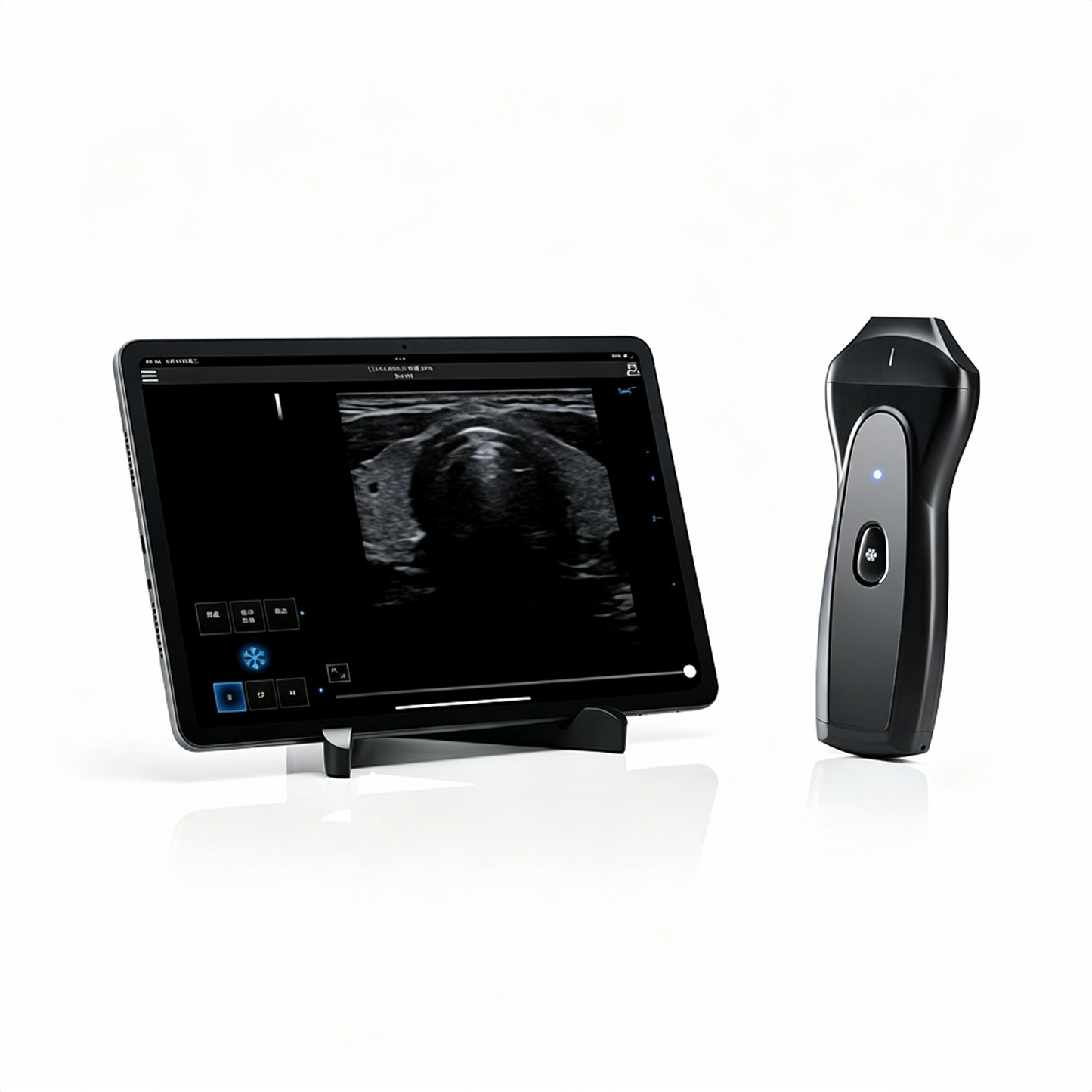
PAU1C Handheld Emergency MSK Ultrasound | POCUS Trauma & Foreign Body Detection
PAU1C Handheld Emergency MSK Ultrasound | POCUS Trauma & Foreign Body Detection
Handheld emergency MSK ultrasound for trauma POCUS, foreign body detection, and fracture screening. 192‑element, 5‑14MHz, 212g wireless design with IPX7 waterproof. Ideal for ED, sports medicine, and urgent care.
The Global Healthcare Medical PAU1C Handheld Emergency MSK Ultrasound is a professional point‑of‑care ultrasound (POCUS) device engineered specifically for emergency department trauma assessment, sports medicine, and urgent care settings. Weighing just 212g and featuring a 192‑element linear probe with an adjustable 5.0–14.0 MHz frequency range and 20–150 mm scanning depth, this ultra‑portable system delivers robust musculoskeletal imaging performance tailored for acute trauma evaluation.
Whether you're performing bedside foreign body localization, fracture screening, muscle tear assessment, or soft tissue evaluation, the PAU1C provides the clarity, speed, and portability that emergency clinicians demand. Its wireless cross‑platform compatibility, IPX7 waterproof design, and protective case that doubles as a wireless fast charger make it the ideal solution for busy ED environments.
Key Features
🚨 Specialized POCUS Foreign Body Detection & Bedside Localization
The PAU1C is purpose‑built for POCUS foreign body detection and bedside localization in emergency trauma cases. Unlike X‑ray limitations on radiolucent fragments (wood, plastic, glass), this portable unit clearly identifies hidden soft tissue foreign bodies and subtle lesions. It supports real‑time trauma ultrasound soft tissue evaluation, helping emergency clinicians quickly locate debris, assess tissue damage, and guide precise removal procedures to avoid secondary infection and missed injuries.
🦴 Versatile ED Trauma Screening for Fractures & Muscle Injuries
Optimized for urgent care scenarios, the PAU1C excels in portable ultrasound fracture screening and acute muscle trauma diagnosis. Its wide depth and frequency range efficiently evaluates bone surface integrity, muscle tears, soft tissue swelling, and hematomas in emergency settings. Fast bedside scanning eliminates waiting delays for traditional imaging, allowing medical teams to complete rapid triage and formulate targeted treatment plans for acute traumatic injuries on‑site.
📊 High‑Definition Imaging with 192‑Element Array
Equipped with 192‑element channels, the PAU1C captures abundant scan data to generate detailed, consistent soft tissue images. With an adjustable 36–120 dB dynamic range, 1–100% gain, 8‑segment TGC (time gain compensation), and speckle reduction on/off, it provides balanced imaging for both superficial trauma details and deep tissue structures.
⚡ Ultra‑Lightweight & Ergonomic Design
Weighing just 212g, the PAU1C features an ergonomic handheld design that reduces hand fatigue during extended use in busy ED environments. Its IPX7 waterproof rating ensures durability and easy disinfection.
📱 Wireless Cross‑Platform Compatibility
The PAU1C supports seamless integration with Windows, Android, and iOS devices including phones and tablets. This plug‑and‑play, cord‑free design ensures stable, instant operation in busy ED environments, greatly boosting clinical efficiency for emergency POCUS and trauma ultrasound routines.
🔋 Wireless Fast Charging & Protective Case
The PAU1C's exclusive protective case doubles as a wireless fast charger, protecting the device from impact damage while eliminating cable reliance. The built‑in 3200mAh battery supports extended scanning sessions. Fast wireless charging reaches 43% in 30 minutes and 100% in 60 minutes.
📊 Comprehensive Imaging Modes
The PAU1C supports a full range of imaging modes:
| Mode | Application |
|---|---|
| B Mode | Standard 2D grayscale imaging for MSK evaluation |
| CF (Color Flow) | Real‑time blood flow visualization |
| M Mode | Motion mode for tissue movement assessment |
| Color M Mode | Color flow combined with M‑mode |
| PW (Pulsed Wave Doppler) | Spectral analysis of blood flow velocity |
| PDI (Power Doppler Imaging) | High‑sensitivity flow detection |
| DPDI (Directional Power Doppler) | Flow detection with direction information |
| Needle Enhancement | Guided procedures and foreign body removal |
🌍 Multi‑Language Support
The PAU1C supports 10 global languages: English, Arabic, Chinese, French, German, Indonesian, Italian, Portuguese, Russian, and Spanish.
📊 Comprehensive Data Management
The device supports DICOM standard storage and common image formats (BMP, JPG) for complete medical record archiving.
Specifications
Applications
The PAU1C Handheld Emergency MSK Ultrasound is suitable for:
-
Emergency Departments (ED) – Rapid trauma POCUS, foreign body detection, fracture screening
-
Sports Medicine – On‑field muscle tear assessment and injury evaluation
-
Urgent Care Clinics – Point‑of‑care musculoskeletal diagnostics
-
Military & Field Medicine – Portable trauma imaging in austere environments
-
Orthopedic Clinics – Bedside MSK evaluation and guided procedures
-
Rural & Remote Healthcare – Portable imaging where traditional X‑ray is unavailable
Why Choose the PAU1C?
| Standard Ultrasound Systems | Global Healthcare Medical PAU1C |
|---|---|
| Bulky, heavy equipment | Ultra‑lightweight (212g), handheld |
| Limited ED‑specific features | Specialized for trauma POCUS, foreign body, fracture screening |
| Wired, restricted mobility | Wireless with cross‑platform compatibility |
| X‑ray limitations on radiolucent fragments | Clearly identifies hidden soft tissue foreign bodies |
| Standard charging | Wireless fast charging with protective case |
| Basic water resistance | IPX7 waterproof for easy disinfection |
| Limited imaging modes | 8 modes including Needle Enhancement |
What's Included
-
PAU1C Handheld Emergency MSK Ultrasound Main Unit
-
192‑Element Linear Probe
-
3200mAh Battery (built‑in)
-
Protective Case with Wireless Fast Charger
-
USB Charging Cable
-
User Manual
FAQ
Q: What is the PAU1C Handheld Emergency MSK Ultrasound?
A: The PAU1C is a professional point‑of‑care ultrasound device engineered specifically for emergency department trauma assessment, sports medicine, and urgent care settings, featuring a 192‑element linear probe, 5.0–14.0 MHz frequency range, and ultra‑lightweight 212g design.
Q: What emergency applications is the device suitable for?
A: The PAU1C excels at POCUS foreign body detection and bedside localization, portable fracture screening, acute muscle trauma diagnosis, and real‑time soft tissue evaluation in emergency settings.
Q: How does the PAU1C compare to X‑ray for foreign body detection?
A: Unlike X‑ray limitations on radiolucent fragments (wood, plastic, glass), the PAU1C clearly identifies hidden soft tissue foreign bodies and subtle lesions, helping clinicians quickly locate debris and guide precise removal procedures.
Q: What is the weight of the device?
A: The PAU1C weighs just 212g, featuring an ergonomic handheld design that reduces hand fatigue during extended use.
Q: What imaging modes does the device support?
A: The PAU1C supports B, CF, M, Color M, PW, PDI, DPDI, and Needle Enhancement imaging modes.
Q: What devices is the PAU1C compatible with?
A: The PAU1C connects seamlessly to Windows, Android, and iOS devices including phones and tablets.
Q: Is the device waterproof?
A: Yes. The PAU1C features an IPX7 waterproof rating for durability and easy disinfection.
Q: How does wireless charging work?
A: The PAU1C's protective case doubles as a wireless fast charger, protecting the device from impact damage while eliminating cable reliance. Fast charging reaches 43% in 30 minutes and 100% in 60 minutes.
Q: What languages does the interface support?
A: The PAU1C supports 10 global languages: English, Arabic, Chinese, French, German, Indonesian, Italian, Portuguese, Russian, and Spanish.
Q: What is the frequency range and scanning depth?
A: The PAU1C features an adjustable 5.0–14.0 MHz frequency and 20–150 mm scanning depth, adapting seamlessly to varied clinical needs from superficial trauma details to deep tissue structures.